
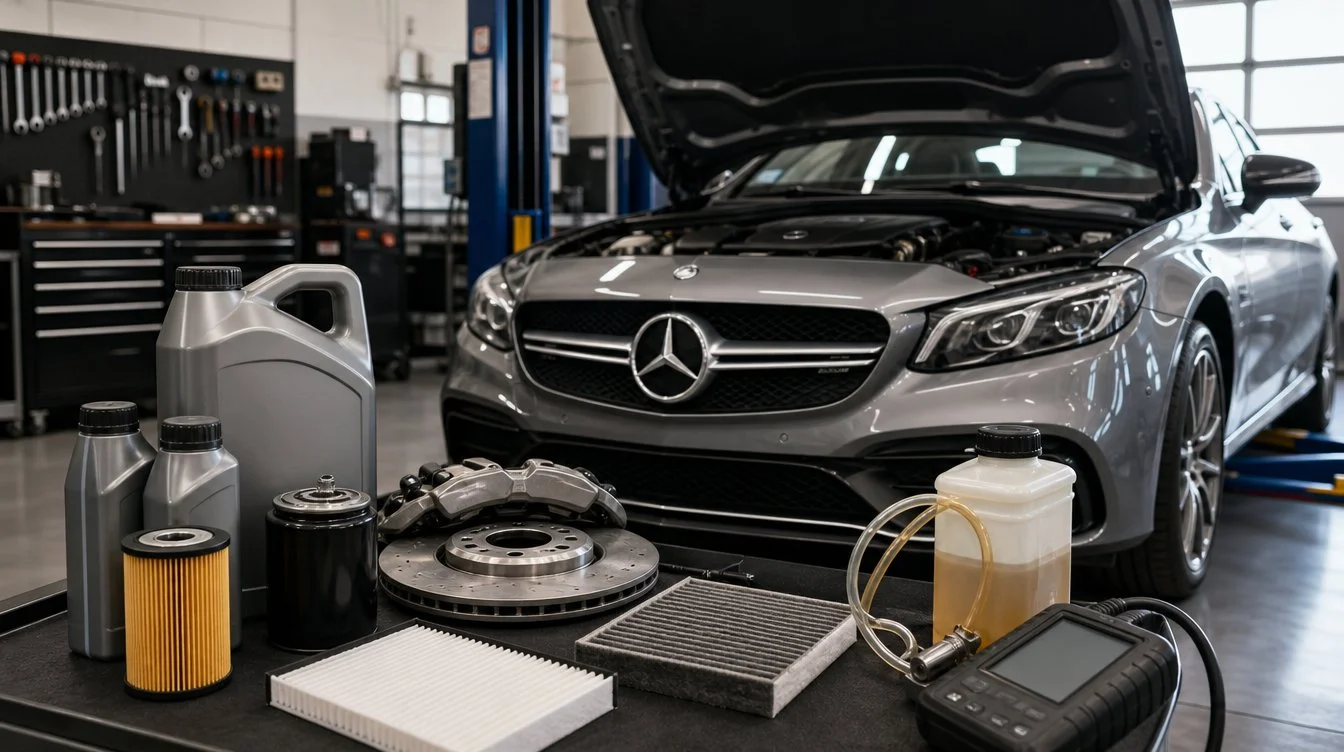
Mercedes-Benz vehicles utilize a rotating maintenance framework called the Flexible Service System (ASSYST Plus), which alerts drivers when it is time for routine shop care. Mercedes Service A is an initial one-year or 20,000-kilometer interval designed for fundamental engine preservation, whereas Mercedes Service B is a comprehensive two-year or 40,000-kilometer inspection check. While both intervals include mandatory synthetic oil and filter replacements, Service B introduces critical hydraulic fluid flushes and interior ventilation upgrades.
Choosing an independent Mercedes mechanic allows vehicle owners across the Lower Mainland to complete these factory-required procedures in full accordance with warranty guidelines, without the high dealership markups.
The Timeline: Navigating Your Mercedes Maintenance Schedule
When you invest in a luxury platform like a Mercedes-Benz C-Class, GLE, or premium AMG model, the vehicle’s internal engineering monitors your driving patterns dynamically. Instead of guessing when your next shop visit should be, your digital instrument cluster will display a clear alert when an interval is approaching. For drivers operating across the varying terrain of British Columbia, understanding this timeline is essential for long-term engine survival.
The factory schedule follows a strict, alternating cycle throughout the life of your vehicle. The baseline system is divided into two primary categories:
Service A: Your vehicle's first major maintenance appointment occurs at approximately 1 year or 20,000 kilometers, whichever comes first. After this initial visit, it repeats every two years (at 60,000 km, 100,000 km, etc.).
Service B: This more intensive care check kicks in at 2 years or 40,000 kilometers, whichever comes first. Like the entry service, it rotates every two years, appearing next at your 80,000 and 120,000-kilometer milestones.
The Checklist: Breaking Down the Maintenance Steps
Many local luxury car owners wonder why the cost of a Service B appointment is higher than a Service A visit. The price difference lies entirely in the depth of the physical checklist and the specialized components replaced during the service.
The Essential Baseline (Shared by Both A and B Services)
Every rotating service interval starts with a foundational baseline of core engine care. This includes draining and replacing your engine's oil with premium, factory-approved synthetic motor oil and installing a fresh OEM fleece oil filter. Technicians then check and correct all internal fluid levels, including engine coolant, power steering reservoirs, and windshield washer fluids dependent on your specific model year. Finally, a thorough brake component inspection is performed alongside a tire inflation check.
The Critical Additions Unique to Service B
Service B goes significantly deeper into the vehicle's structural systems. Technicians completely remove and replace your vehicle's cabin dust and combination filters to protect the interior environment. Most importantly, Service B requires a complete brake fluid exchange. Because brake fluid is hygroscopic (meaning it actively absorbs moisture from the air), flushing the old fluid out prevents dangerous internal line corrosion. Once all items are physically checked, technicians connect specialized software to reset your dashboard's maintenance counter.
Local Context: Why BC Climate Patterns Demand Precision Care
The unique, coastal geography of Metro Vancouver places demanding loads on premium automotive hardware. While a vehicle operating in a dry, flat environment can sometimes tolerate slightly delayed service windows, the stop-and-go corridors of the Lower Mainland make skipping these checklists highly risky.
Our heavy seasonal rain and high humidity directly affect your braking systems. Moisture can quietly seep past rubber seals into your brake fluid reservoir during humid commutes down the Lougheed Highway. If this fluid isn't systematically flushed out during your scheduled Service B check, the moisture lowers the fluid's boiling point. Under heavy braking down steep local descents like Burnaby Mountain, this contaminated fluid can vaporize, causing a spongy brake pedal or a sudden loss of stopping power.
Similarly, our damp winter weather and heavy regional tree pollen create a prime environment for organic debris to clog your cabin air filter. Over time, a blocked filter restricts the airflow inside your luxury cabin, leading to persistent window fogging during rainy days and allowing mold spores to develop inside your heating and cooling vents.
Conclusion: The Premium Independent Alternative in Burnaby
Following your Mercedes maintenance schedule shouldn't mean overpaying at a distant corporate dealership. Many drivers feel pressured to use corporate service centers out of fear of compromising their factory warranty protection. However, Canadian consumer laws protect your right to service your vehicle at any qualified independent garage.
At Daniel’s Auto Service, we provide a trustworthy, highly technical dealership alternative right here on Russell Ave. Our team utilizes genuine OEM parts, approved synthetic lubricants, and exact factory inspection sheets to keep your vehicle running precisely as engineered. We mirror the technical accuracy of a major dealer while maintaining the clear communication, personal care, and fair, straightforward value of a local family business.
Frequently Asked Questions: The Daniel’s Auto Service Approach
-
No. As long as the service is performed according to factory mileage and time specifications using approved fluids and parts, your warranty remains fully intact under Canadian consumer protection guidelines.
-
Delaying your scheduled maintenance allows old engine oil to break down, increasing friction and wear on vital internal engine components. Additionally, old brake fluid can lead to internal system corrosion and reduced stopping efficiency.
-
The cabin air filter screens out road dust, pollen, and pollutants before they can enter your passenger cabin. Replacing it every two years ensures clean cabin air quality and prevents strain on your vehicle's defroster and blower motor.
-
Because Service B involves an intensive brake fluid flush, cabin filter installation, and comprehensive component inspections alongside the engine oil change, the process typically takes between two to three hours.
-
We invest directly in factory-compatible diagnostic scanners and specialized resetting tools. This allows our technicians to interface directly with your Mercedes’ onboard computers, execute precise system tests, and update your internal service logs accurately.