
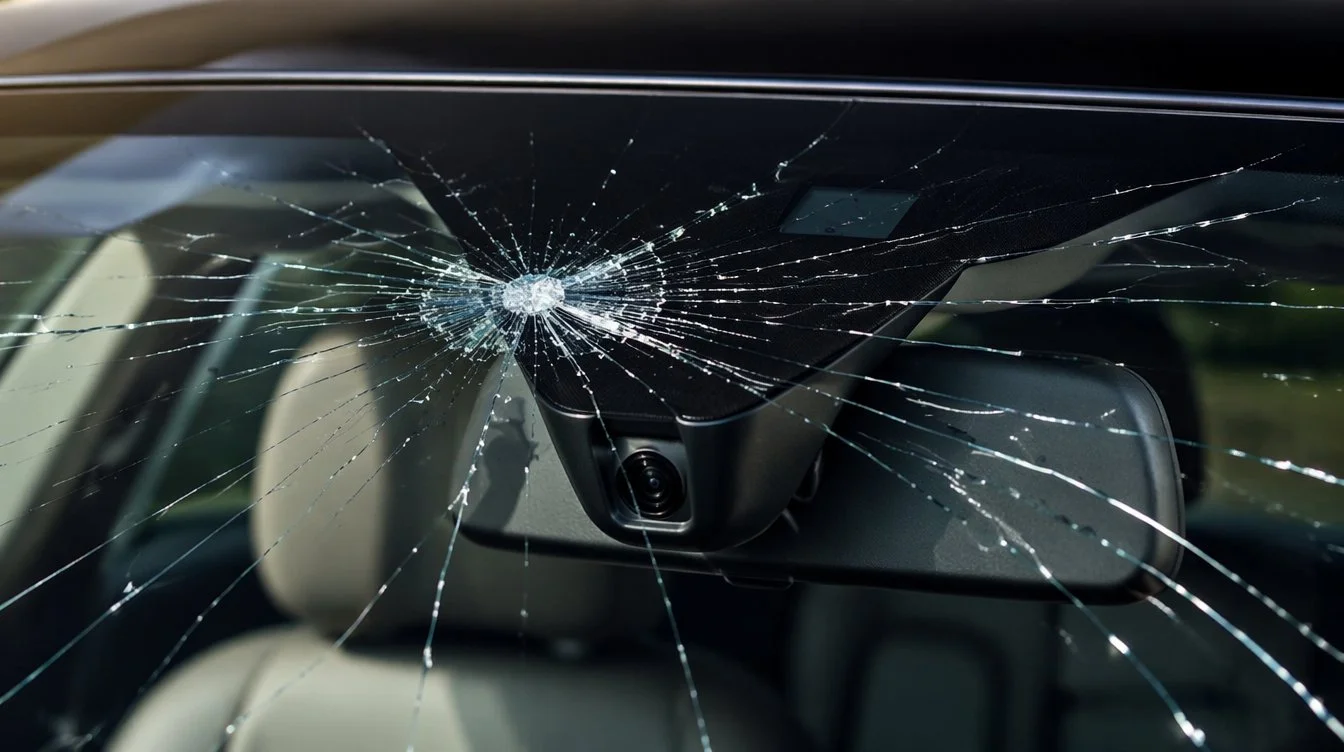
Advanced Driver Assistance Systems (ADAS) are standard in modern European vehicles, and local search volume for calibration is spiking as drivers realize a simple windshield replacement is no longer a plug-and-play job. Because forward-facing safety cameras and proximity sensors are mounted directly to the interior of the glass, installing a new windshield shifts their factory field of view by fractions of a millimeter.
This minor misalignment completely miscalibrates your vehicle's safety network. Utilizing OEM-level diagnostic tools and physical aiming targets is the only reliable way to execute a precision windshield replacement sensor reset, ensuring your safety features react flawlessly on Lower Mainland roads.
The Tech Behind Modern European Car Safety Features
When you drive a BMW, Mercedes, Audi, or Volkswagen around Burnaby, your windshield does far more than shield you from weather on Highway 1. It serves as the structural foundation for your vehicle's safety network. Housed behind a plastic trim panel right next to your rearview mirror sits a cluster of highly sophisticated, forward-facing optical cameras and radar sensors.
These sensors serve as the physical eyes of your car's safety network. They continuously map out painted road lines, calculate the speed of vehicles ahead, and scan for sudden obstacles during heavy traffic. This real-time data feeds into your vehicle’s advanced driving features, managing systems like lane keeping assist, forward collision warning, automatic emergency braking, and adaptive cruise control.
Because these cameras look through the glass to read the road, their precise positioning is calculated down to the micrometer by European automotive engineers. The glass itself is an optical element in the system; its curvature, thickness, and light-transmission properties are all factory matched to the camera’s lens profile. This level of technical integration means that the modern automotive glass structure is an active, electronic component of the vehicle's handling and safety array.
The Danger of Skipping a Recalibration
The single biggest mistake local drivers make after a flying rock chips their auto glass on Highway 1 is assuming a windshield replacement is a purely cosmetic fix. When a piece of auto glass is removed and replaced, the mounting position of that forward-facing camera shifts. Even a tiny deviation of a single millimeter at the glass level can cause the camera's calculation path to drift by several meters down the road.
Skipping a windshield replacement sensor reset introduces massive, hidden safety hazards. Your vehicle may experience sudden steering drift, where the lane keeping system misinterprets road markings and tries to steer you off line. Even more critical, your automatic emergency braking could face delayed activation or clamp down violently on the brakes when there is no danger, misinterpreting a shadow, a road seam, or an overhead sign as an obstacle.
Driving a premium European car with uncalibrated safety sensors turns an engineered masterpiece into an unpredictable stressor. Seeing unexpected error codes on your dashboard or experiencing glitchy steering wheel feedback strips away your driving confidence, turning an everyday commute across the Lower Mainland into a high-stakes guessing game. For business owners managing local fleets or families relying on their daily commuter, an unreliable safety module is an open liability that places everyone on the road at risk.
The Process: Static vs. Dynamic ADAS Calibration
Correcting this sensory drift requires an incredibly rigorous alignment process. Depending on the exact make and model of your vehicle, professional auto repair shops must utilize one of two distinct procedures or a combination of both to reset the system's baseline parameters. Both paths require high-end diagnostic computers and master technician training.
Static Calibration
This method takes place within a specialized, highly controlled workshop environment. The vehicle is placed on a completely flat surface, and a technician sets up precision geometric target boards at exact distances around the vehicle using laser lines. The car's internal computer is then linked to diagnostic software, commanding the camera to lock onto these physical charts to reset its factory zero-points. The room must have uniform lighting and no reflective surfaces, as any optical interference can cause the software to miscalculate the sensor alignment.Dynamic Calibration
Certain manufacturers require the vehicle to learn out on the road. The technician plugs a mobile diagnostic terminal into your car's interior data port and drives the vehicle on a pre-planned route at a specified speed. The car scans stable real-world reference points, like distinct lane markers and stationary roadside objects, until the onboard system confirms the camera has successfully self-calibrated. This requires consistent driving parameters, meaning the technician must navigate local corridors like the Lougheed Highway during off-peak windows to allow the system to log uncorrupted data.
Conclusion: The Trusted Dealership Alternative in Burnaby
Leaving your advanced vehicle safety systems uncalibrated after a glass replacement is an unnecessary gamble. While specialized glass networks can replace physical panes, they rarely possess the factory-level programming infrastructure required to sync your vehicle’s central computers.
At Daniel’s Auto Service, we provide a certified alternative for specialized sensor resets right here in Burnaby. Our facility combines premium diagnostic platforms and specialized physical targeting hardware with the fair, transparent, and honest communication of a local, family-owned shop on Russell Ave. Let us make sure your vehicle's safety features are perfectly aligned before you head back out on the road.
Frequently Asked Questions: The Daniel’s Auto Service Approach
-
The safety cameras are glued directly to the glass interface. When the glass is swapped, the camera's angle changes slightly. Calibration resets the software so it understands its new physical perspective.
-
Common indicators include persistent lane-departure warning lights, a vehicle that sways or pulls to one side when lane-keep assist is active, or a cruise control system that refuses to engage.
-
Costs vary based on whether your European car requires static targets, a dynamic road drive, or both. Choosing an independent specialist like Daniel’s Auto Service delivers the same accuracy as a dealership without the steep corporate markups.
-
It is highly discouraged. While the mechanical components of the car will function normally, your vehicle's active safety features may miscalculate braking distances or lane positions, increasing collision risks.
-
We are true automotive enthusiasts who understand track physics. We don't just bolt on cosmetic parts; we engineer complete, balanced track solutions tailored to your specific vehicle platform.