
Hybrid Battery Health in 2026: What European Electric Car Owners Need to Know
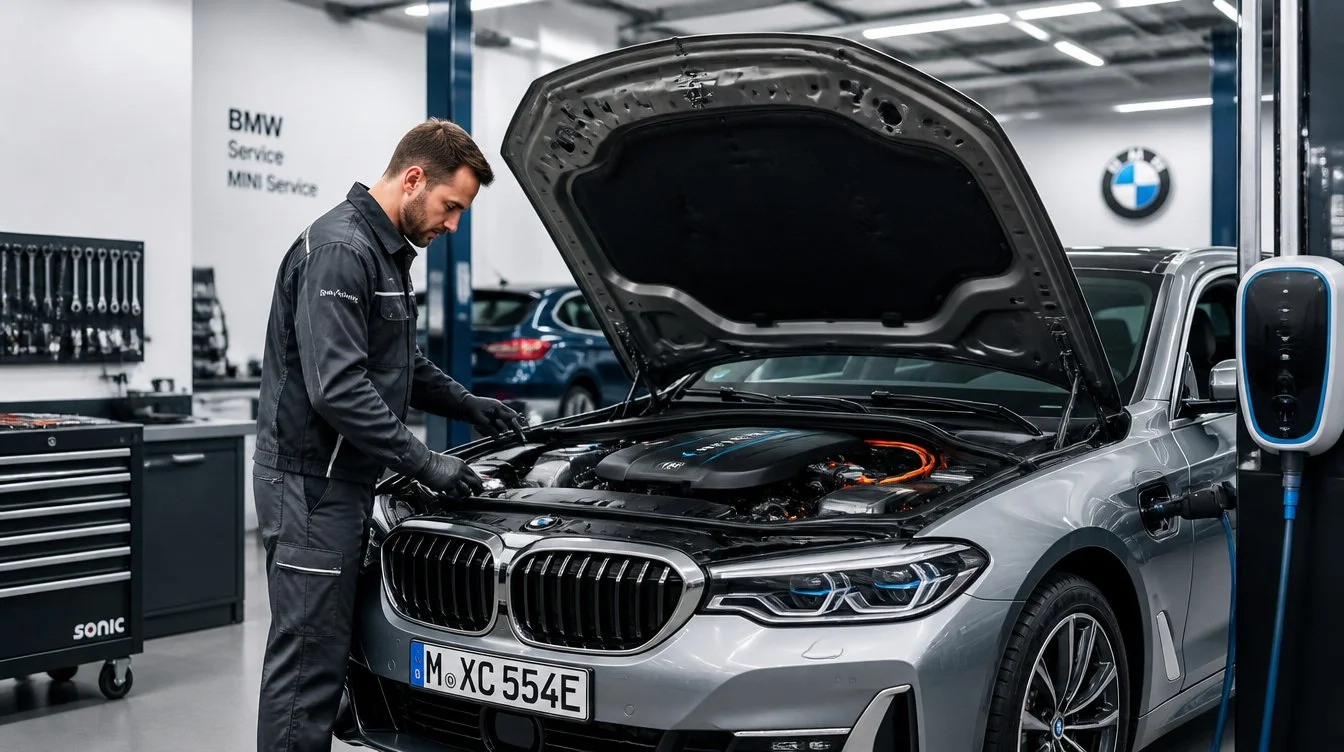
As early-generation European hybrids age and new 2026 models roll out, battery degradation is a top concern for owners. Standard mechanics often lack the software to diagnose these complex drivetrains. Because high-voltage lithium-ion packs manage power across dozens of interconnected internal cells, a single weak module can compromise your entire electrical propulsion system.
Utilizing OEM-level European hybrid diagnostics is the only way to accurately map cell voltage variations, pinpoint structural degradation, and perform the precise calibrations required to restore your Plug-in Hybrid Electric Vehicle (PHEV) or mild-hybrid powertrain to factory efficiency.
The Reality of Lithium-Ion Degradation
Driving a modern hybrid like a BMW e-Drive or a Mercedes-Benz EQ Power model down the Highway 1 corridor offers an exceptional blend of luxury and efficiency. However, underneath your trunk floor sits a highly complex chemical power plant. Over years of daily operations, the lithium-ion chemistry inside your battery pack undergoes natural degradation. Every time your vehicle cycles power, moving from full charge to engine assist, microscopic structural shifts occur within the battery cells.
It is critical for vehicle owners to differentiate between normal component wear and actual system failure. Normal wear typically looks like a predictable, uniform loss of maximum capacity over a long time horizon, often tracking around 1% to 2% annually depending on your driving volume. In contrast, an actual battery pack failure usually involves an internal imbalance—where one or two localized cells degrade significantly faster than the rest of the network, dropping their electrical resistance parameters and pulling down the operating capacity of the entire vehicle array.
Clear Warning Signs of a Weakening Hybrid Pack
When your hybrid system begins to slip below its nominal operating margins, your car won’t always illuminate a drastic red warning light immediately. Instead, the vehicle's central command system will subtly alter its performance profiles to mask the underlying weakness. Drivers should keep a close eye out for these three specific performance shifts during their daily Lower Mainland commutes:
Diminished All-Electric Range: If your regular electric-only commute from Burnaby to downtown Vancouver suddenly requires gasoline assist halfway through the trip, your battery cells are struggling to hold their rated chemical energy load.
Frequent Combustion Engine Engagement: If you notice your internal combustion engine firing up under light acceleration or while idling at a red light on Kingsway—scenarios where the car traditionally relies entirely on silent electric power—the hybrid module is actively stepping in to shield a voltage-starved battery.
Extended Charging Windows: If your dedicated wall charger or a local Level 2 public charging station is taking significantly longer to top off your battery despite stable ambient temperatures, internal resistance within the cell packs is likely generating excess heat and slowing down energy acceptance.
Watching your vehicle's electric capability steadily decline introduces a real sense of frustration. You invested in a cutting-edge European hybrid to enjoy smooth, eco-conscious efficiency, but dealing with frequent charging anomalies or watching your fuel consumption climb turns your premium commuter into a source of constant mechanical anxiety.
Why Specialized European Hybrid Diagnostics Are Non-Negotiable
When a standard check-engine light appears, most general auto repair garages will hook up a universal, off-the-shelf OBD2 code scanner. While this basic approach works fine for extracting a simple engine misfire code, it is completely useless when interfacing with a high-voltage BMW or Mercedes hybrid network. Generic scanners can only read surface-level diagnostic trouble codes (DTCs), leaving you completely blind to the actual state of your battery health.
Evaluating a sophisticated European PHEV or mild-hybrid system requires proprietary, factory-tier diagnostic platforms that can interface directly with the dedicated Battery Energy Management System (BEMS). This advanced scanning process allows a trained specialist to pull up real-time telemetry from every individual cell group within the module. Technicians can analyze internal resistance metrics, temperature variance arrays, and exact cell-by-cell voltage matching. Finding a fractional deviation between cells is often the difference between catching a minor balancing issue early or being forced to replace a catastrophic, multi-thousand-dollar battery pack later.
Actionable Advice to Protect Your Hybrid Investment
While individual cell aging is inevitable, how you manage your vehicle's charging habits and thermal profile plays a massive role in extending the functional life of your high-voltage system. Apply these technical practices to maximize your hybrid longevity:
Tip 1: Manage Your Extreme State of Charge Limits
Lithium-ion cells experience the highest amount of chemical stress when they are held at 100% full capacity or drained completely down to 0%. Whenever possible, use your vehicle’s charging software to cap daily charging limits at 80% to 90%, and try to plug in before your instrument cluster shows a completely depleted battery pack.Tip 2: Mind Your Thermal Extremes on Hot Days
High ambient heat accelerates internal battery degradation significantly. During warm summer spells in the Lower Mainland, try to park your vehicle in shaded parkades or home garages rather than leaving it exposed on baking asphalt lots, allowing the battery's passive cooling systems to operate efficiently.Tip 3 : Maintain Consistent System Usage
Hybrid vehicles do not perform well when left sitting idle for weeks at a time. Regular, steady usage allows the internal hybrid management software to continually cycle current, run self-balancing routines across the internal cell blocks, and keep cell voltages uniform.
Conclusion: The Advanced PHEV Alternative in Burnaby
Navigating the complexities of alternative drivetrain engineering shouldn't force you back to high-priced dealership service bays. While standard garages lack the technical programming tools to safely manage high-voltage lines, you do have an authoritative local choice.
At Daniel’s Auto Service, we have invested directly in the specialized training, safety gear, and proprietary diagnostic software suites required to handle advanced BMW battery maintenance and Mercedes hybrid diagnostics. Our facility on Russell Ave bridges the gap between high-tech specialized auto repair and the transparent, value-driven service model of a dedicated local family business. Bring your vehicle by for an accurate, data-backed health check, and ensure your European hybrid remains efficient and reliable for years to come.
Frequently Asked Questions: The Daniel’s Auto Service Approach
-
Most premium factory lithium-ion battery packs are engineered to operate reliably for roughly 8 to 10 years or up to 160,000 kilometers before structural cell imbalances or noticeable capacity drops require targeted repair services.
-
In many cases, yes. Specialized facilities equipped with advanced balancing tools can isolate the specific degraded module or cell cluster within the pack and replace only that failing infrastructure, saving you thousands compared to a full factory replacement.
-
Cold weather slows down chemical reactions inside lithium-ion cells, reducing their efficiency. The vehicle's computer will deliberately run the combustion engine more frequently to generate essential cabin heat and protect the cold battery from high electrical demands.
-
It is completely safe, provided the facility employs technicians specifically certified in high-voltage safety standards and possesses OEM-compatible diagnostic computers capable of safely managing the hybrid control modules.
-
Our advanced diagnostic scan goes deep past surface codes to analyze real-time state-of-health data, specific cell voltage deviations, temperature sensor outputs, and the operating efficiency of your vehicle's internal cooling fans.