
Winter Is Over, But Is Your Car Ready? 7 Spring Maintenance Checks Every Lower Mainland Driver Should Make
Spring in the Lower Mainland does not arrive with a clean break from winter. There is no dramatic snow melt or sudden warm spell. Instead, the rain keeps coming, the roads stay damp, and the freeze-thaw damage that has been quietly building since November starts showing up in ways you can feel behind the wheel. That shimmy at highway speed. The squeal when you brake. The dashboard light you have been meaning to look into.
If your car made it through the winter without a major issue, that is great. But "made it through" is not the same as "ready for what is next." Here are seven things worth checking before you settle into spring driving.
1. Swap Out Your Winter Tires (and Check What Is Underneath)
If you are still running winter tires in April, you are wearing them down faster than you think. Winter rubber compounds soften in warmer temperatures, which means reduced handling, longer stopping distances, and accelerated tread wear. Once temperatures consistently sit above 7 degrees Celsius, it is time to switch to your all-seasons or summer set.
When the winters come off, take a close look at your all-seasons before they go on. Check the tread depth, inspect the sidewalls for cracks or bulges, and verify the pressure. Tires that sat in a garage all winter may have lost pressure, and underinflated tires affect both handling and fuel economy.
2. Get Your Alignment Checked
The Lower Mainland’s roads take a beating every winter. Coastal rain saturates and weakens pavement, and even without heavy snow, the freeze-thaw cycles create potholes that can knock your wheels out of alignment in a single hit. If your vehicle pulls to one side or your steering wheel sits off-centre, an alignment check should be at the top of your list. Ignoring it leads to uneven tire wear and can shorten the life of a brand-new set of tires.
3. Inspect Your Brakes
Your brakes worked hard all winter. Wet roads, stop-and-go traffic, and the occasional emergency stop all contribute to pad and rotor wear. Spring is the right time to have a mechanic measure your brake pad thickness, check the rotors for scoring or warping, and inspect the brake fluid level. If you hear grinding, squealing, or feel pulsation when braking, do not wait.
4. Replace Your Wiper Blades
Wiper blades that survived months of rain, frost, and road grime are almost certainly past their prime. If they are streaking, skipping, or leaving patches of water across your windshield, replace them now. Spring rain is not going anywhere, and clear visibility is not optional. While you are at it, top up your windshield washer fluid. Pollen season is about to make everything dusty.
5. Test Your Battery
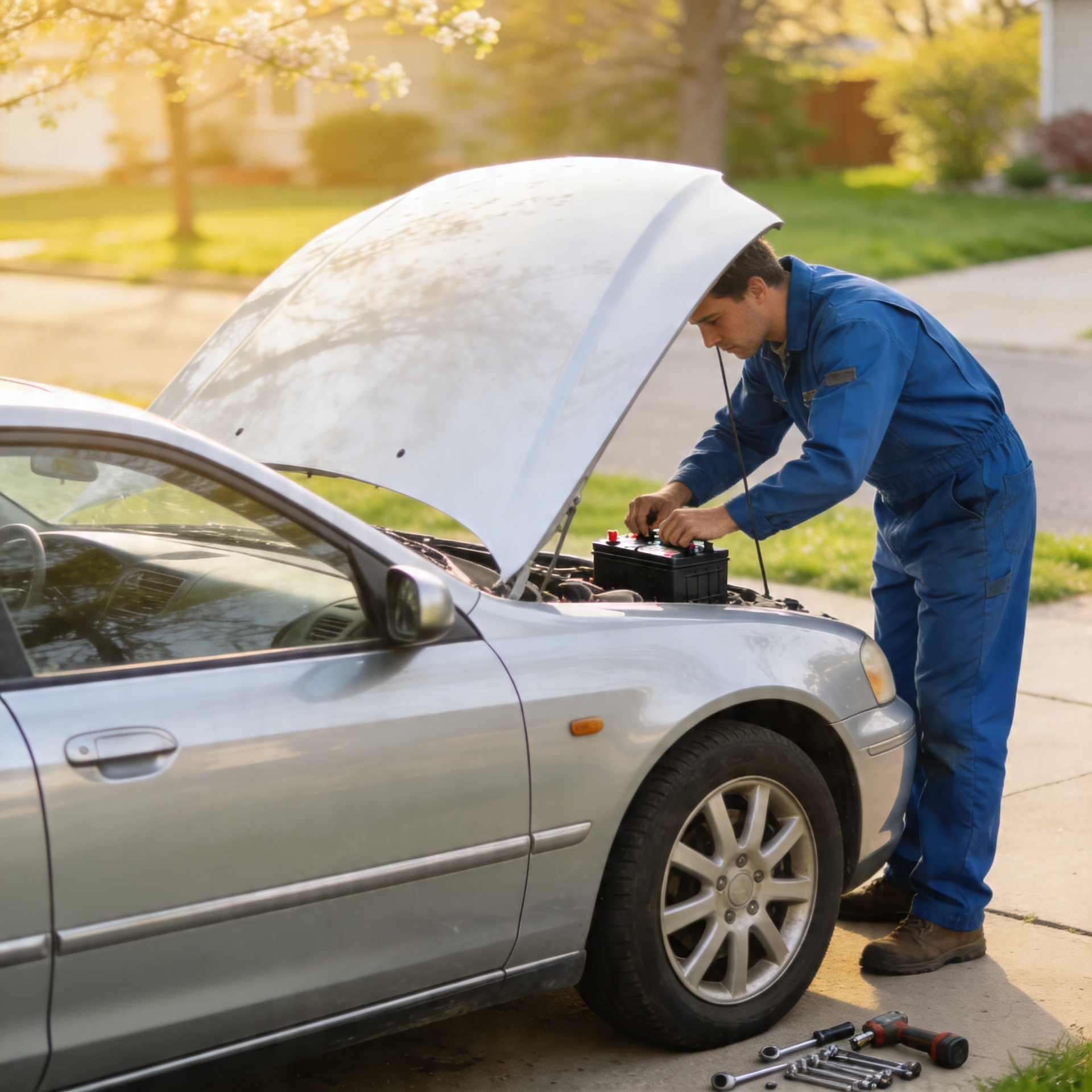
Cold weather is tough on car batteries. It forces them to work harder to start your engine, and over time that strain reduces their overall capacity. A battery that barely got you through winter might not last much longer. Have it tested to make sure it is still holding a proper charge. If your battery is more than three to four years old, consider replacing it before it leaves you stranded on a Monday morning.
6. Check All Your Fluids
Spring is a natural reset point for fluid levels. Engine oil, coolant, brake fluid, transmission fluid, and power steering fluid all play a role in keeping your vehicle running safely and efficiently. Low coolant can lead to overheating as temperatures climb. Old or low brake fluid compromises stopping power. A quick fluid check can catch small problems before they become expensive ones.
7. Give Your Car a Proper Wash
This one is not just cosmetic. Road grime, salt residue (if you have driven through the interior or mountain passes), and general winter buildup can accelerate rust and corrosion, especially on the undercarriage. A thorough wash, including the wheel wells and underside, removes the debris that causes long-term damage. A coat of wax adds a layer of UV protection heading into the sunnier months.
None of these checks take long on their own, but together they make a real difference in how your car performs, how long your components last, and how safe you are on the road. At Daniel’s Auto Service, we see the same patterns every spring: drivers who stayed on top of maintenance glide into the season without a hiccup, while those who put it off end up dealing with bigger, costlier problems down the line. A quick spring inspection now saves you from headaches later.
Frequently Asked Questions: The Daniel’s Auto Service Approach
-
The general guideline is to switch once temperatures consistently stay above 7 degrees Celsius. In the Lower Mainland, that typically means sometime in March or April. Driving on winter tires in warmer weather wears them out faster and reduces your handling.
-
Common signs include your vehicle pulling to one side, your steering wheel sitting off-centre when driving straight, or uneven wear patterns on your tires. Potholes and rough winter roads are the most common causes of alignment issues.
-
Most manufacturers recommend replacing wiper blades every six to twelve months. In the Lower Mainland, where rain is a near-constant, you may need to replace them more frequently. If they streak, skip, or squeak, it is time for new ones.
-
Most car batteries last between three and five years. Cold weather, short trips, and frequent stop-and-start driving can shorten that lifespan. If your battery is over three years old, it is worth having it tested each spring.
-
A thorough spring check should cover engine oil, coolant, brake fluid, transmission fluid, power steering fluid, and windshield washer fluid. Each one plays a critical role in your vehicle’s performance and safety