
Why Your Car Smells Like A Wet Dog?
Living in Greater Vancouver or Lower Mainland means accepting two things: high cost of living and relentless, horizontal rain. But there is one thing you shouldn’t have to accept; that musty, locker-room smell greeting you every time you open your car door.
If your vehicle smells like a wet dog (and you don’t own a dog), you are likely driving a mobile mold incubator. In southern British Columbia, our unique combination of high humidity and tree debris creates the perfect storm for cabin air quality issues. At Daniel’s Auto Service, we’ve seen how quickly a minor dampness can turn into a major health hazard for you and your family.
Science behind the Wet Dog Smell
The scent isn't just an annoyance; it’s a chemical byproduct. When moisture from our 150+ days of rain a year gets trapped in your vehicle's dark, unventilated crevices, it meets organic matter like spilled coffee or small broken tree debris. This creates a buffet for Stachybotrys (black mold) and other fungi. As they grow, they release volatile organic compounds (VOCs). That stink is literally the smell of a microscopic ecosystem thriving in your upholstery.
The Primary Culprit: Your Cabin Air Filter
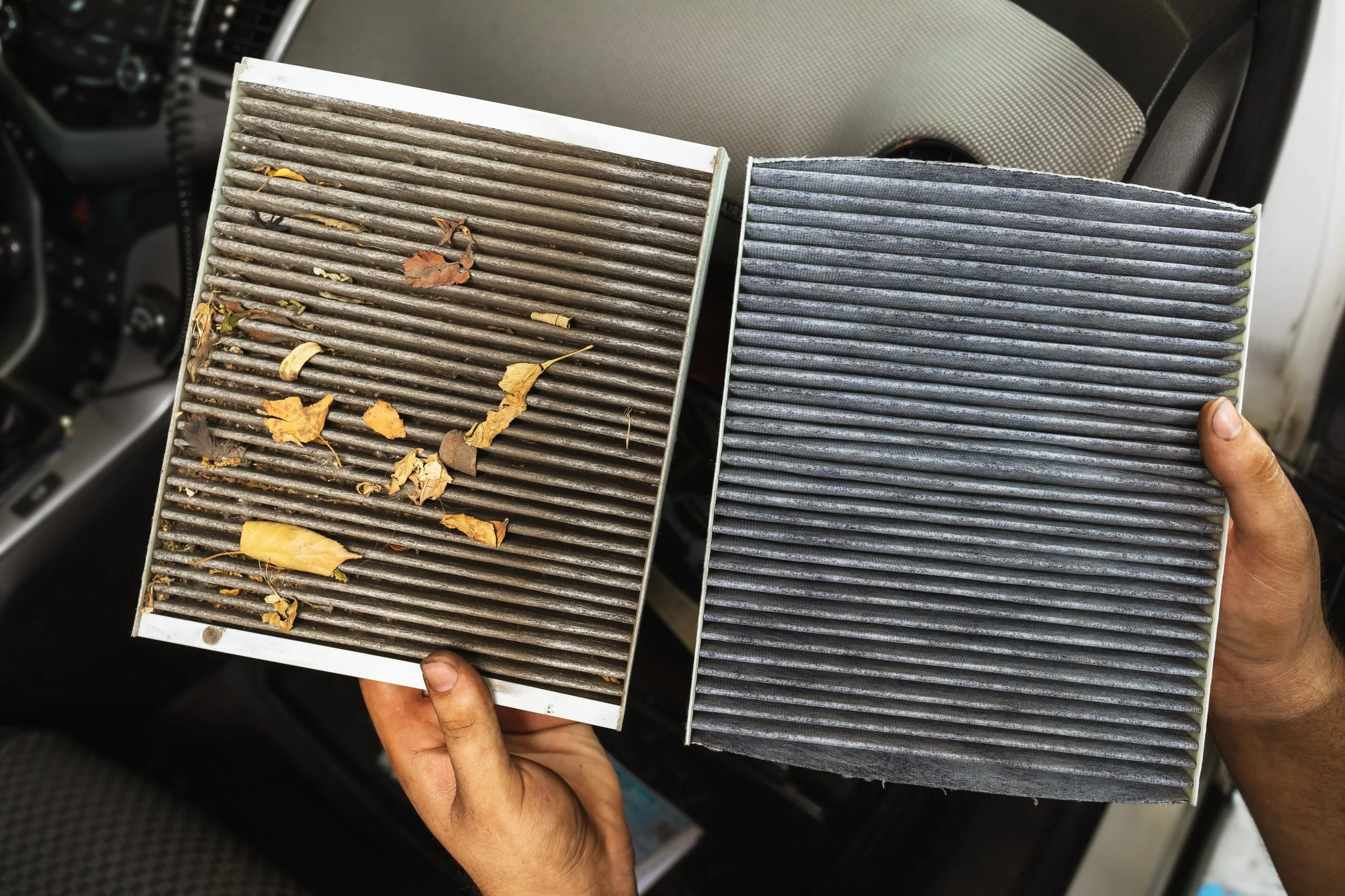
Most drivers are diligent about oil changes, but the cabin air filter is the out of sight, out of mind component that directly impacts your health. This filter is the only barrier between the outside air and your lungs.
Think about your daily commute. Whether you are idling on the Lougheed Highway or driving through the leafy, tree-lined streets of Burnaby Heights, your car is sucking in everything from pine needles and pollen to soot from transit buses. After a Vancouver winter, that filter is often sodden with moisture. When organic matter gets wet and sits in the dark filter housing, it doesn't just block airflow; it becomes a breeding ground for spores. If you notice your windows are fogging up more than usual, a clogged, damp cabin filter is often the reason.
The Evaporator Effect: The Source of the Sour Blast
Have you ever started your car and been hit with a sharp vinegar or gym bag smell that fades after a few minutes? That is the AC Evaporator at work.
Your car’s Air Conditioning (AC) system isn’t just for those three weeks of Vancouver summer; it’s a vital dehumidifier for our wet winters. The evaporator core pulls moisture from the cabin air to keep your windows clear. However, if the moisture doesn't drain properly often due to a buildup of sludge from dust and biological growth bacteria begin to colonize the evaporator fins. When you turn on the fans, you are essentially blowing air through a wall of bacteria directly into your face.
The Secondary Leak: Check Your Seals
In many European vehicles particularly, the wet dog smell can be traced to physical leaks. Rainwater can bypass worn window seals or clogged sunroof drains (a common issue we see in Audi and VW models at the shop). This water pools under the carpet where the foam padding acts like a giant sponge. You might not see a puddle, but the moisture is trapped against the metal floorboards, leading to rust and a permanent musty odor that a simple "tree air freshener" will never fix.
The Daniel’s Auto Service Fresh Air Solution
Don't just mask the smell with a vent clip. That’s like spraying perfume on a trash can, it just creates a lavender-scented trash can. At Daniel’s Auto Service, we take a two step approach to restoring your cabin’s air quality:
Professional Filter Replacement: We don't just put in the cheapest paper filter. We use high-grade, OEM filters that don't just trap dust, but actually neutralize odors and gases.
Drain & System Clearing: We inspect your AC drain tubes to ensure water is dripping onto the road where it belongs, not sitting in your dashboard. We also offer specialized antimicrobial foaming treatments that clean the evaporator fins directly.
Breathe Easier in Burnaby
Your car should be a sanctuary from the Vancouver rain, not a source of respiratory irritation. If you find yourself sneezing more often behind the wheel or turning up the radio just to ignore the smell, it’s time for a professional intervention.
Is your car making you sick? Don't wait for the spring thaw to address winter's dampness. Book a Fresh Air inspection at Daniel’s Auto Service today. We are proudly serving the community from our Burnaby shop at 7147 Russell Ave, helping drivers across British Columbia to breathe clean air again.
Frequently Asked Questions: The Daniel’s Auto Service Approach
-
The smell usually originates from the cabin air filter or the AC evaporator, rather than the carpets. In the damp Metro Vancouver climate, organic debris like pine needles gets trapped in the filter housing. When this debris stays wet, it breeds mold and mildew. As air passes through the filter and over the evaporator fins, it carries those musty odors directly into the cabin.
-
No, that smell is a sign of mold, mildew, or bacterial growth within your vehicle's HVAC system. For individuals with asthma, allergies, or respiratory sensitivities, breathing in these spores during a daily commute can lead to sneezing, coughing, or sinus irritation. A professional ozone treatment or antimicrobial cleaning can neutralize these pathogens.
-
While many manufacturers suggest every 20,000 to 30,000 km, we recommend replacing it once a year, ideally after the autumn leaf-fall. In Burnaby and Vancouver, our high humidity and heavy tree cover mean filters get "sodden" and clogged with organic matter much faster than in drier climates.
-
Persistent interior fogging is usually a sign of excessive moisture trapped in the cabin. This can be caused by a saturated cabin air filter that is no longer allowing the AC system to dehumidify the air, or by a physical leak (like a clogged sunroof drain) that has allowed water to pool under your floor mats.
-
Standard household disinfectants or air fresheners only mask the odor temporarily and can sometimes damage the delicate plastics or electronics inside your dashboard. To truly fix the issue, you must remove the source of the smell (the dirty filter) and treat the evaporator core with specialized automotive foaming cleansers that are designed to kill bacteria without damaging the HVAC components.